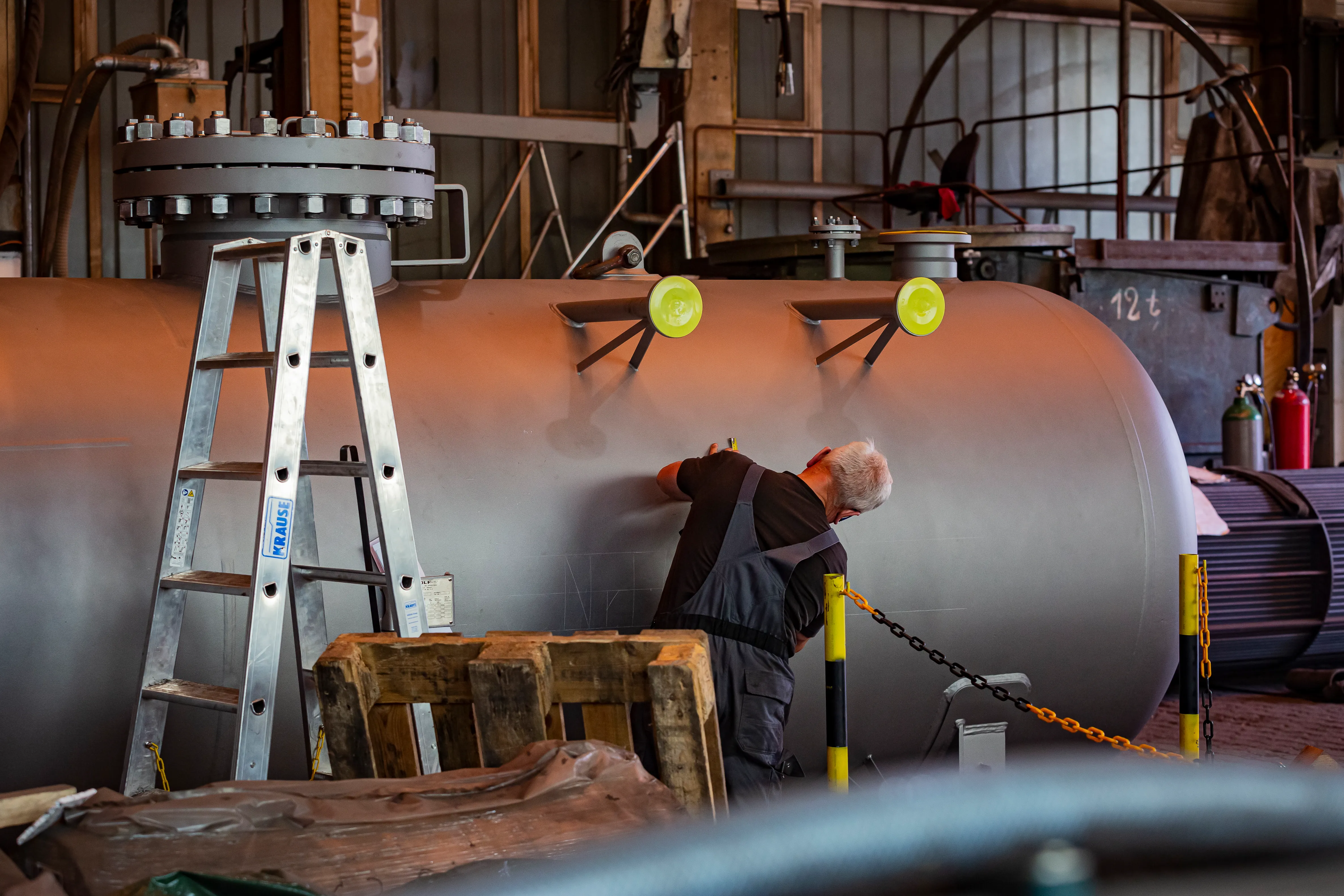
Pressure storage tanks / Storage tanks
High-pressure hydrogen requires maximum safety. We design and manufacture industrial H2 pressure storage vessels and storage tanks that confidently withstand the extreme stresses of the hydrogen industry. Engineered for the highest number of pressure cycles, fully compliant with standards, and permanently safe.
Uncompromising leak-tightness and burst resistance
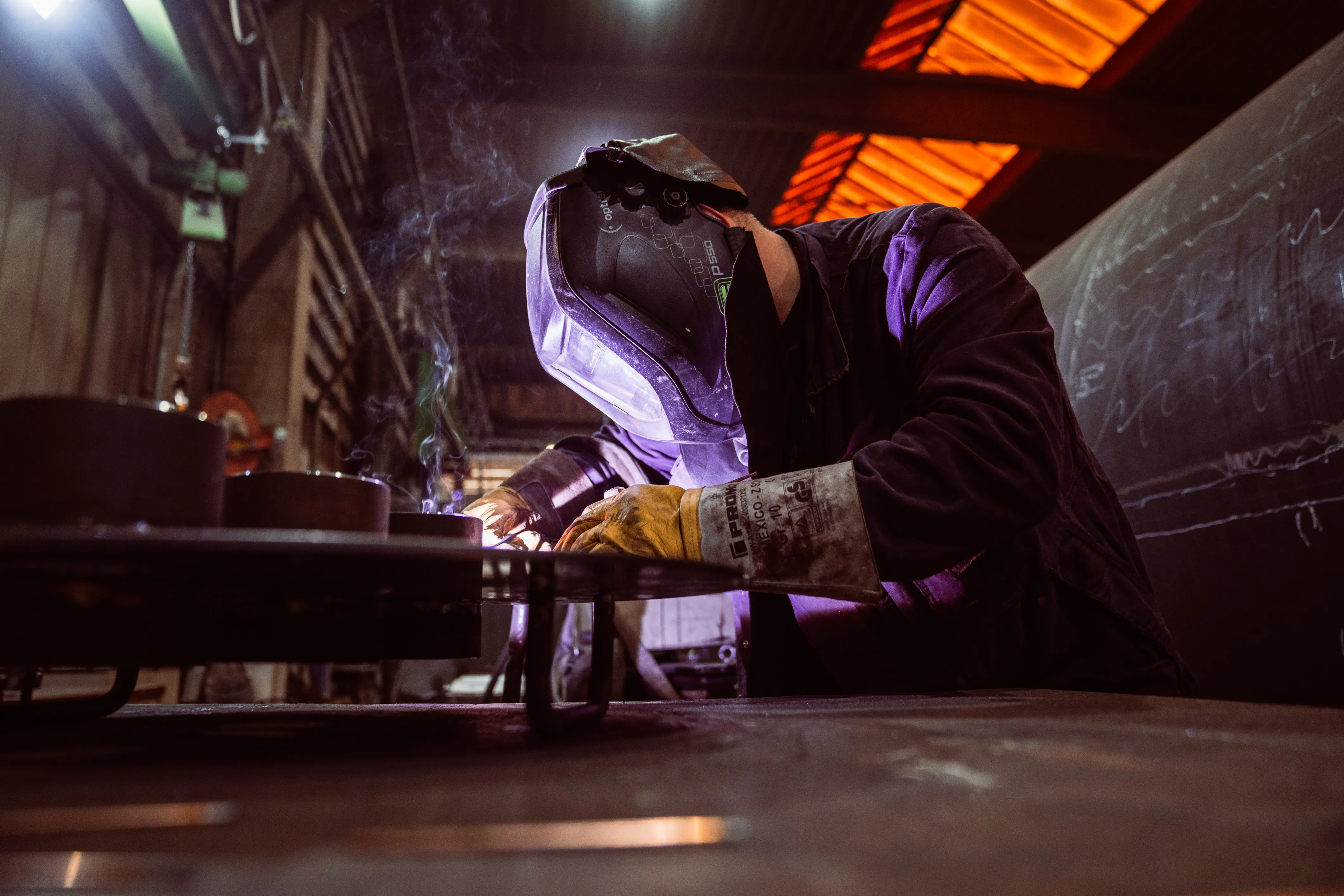
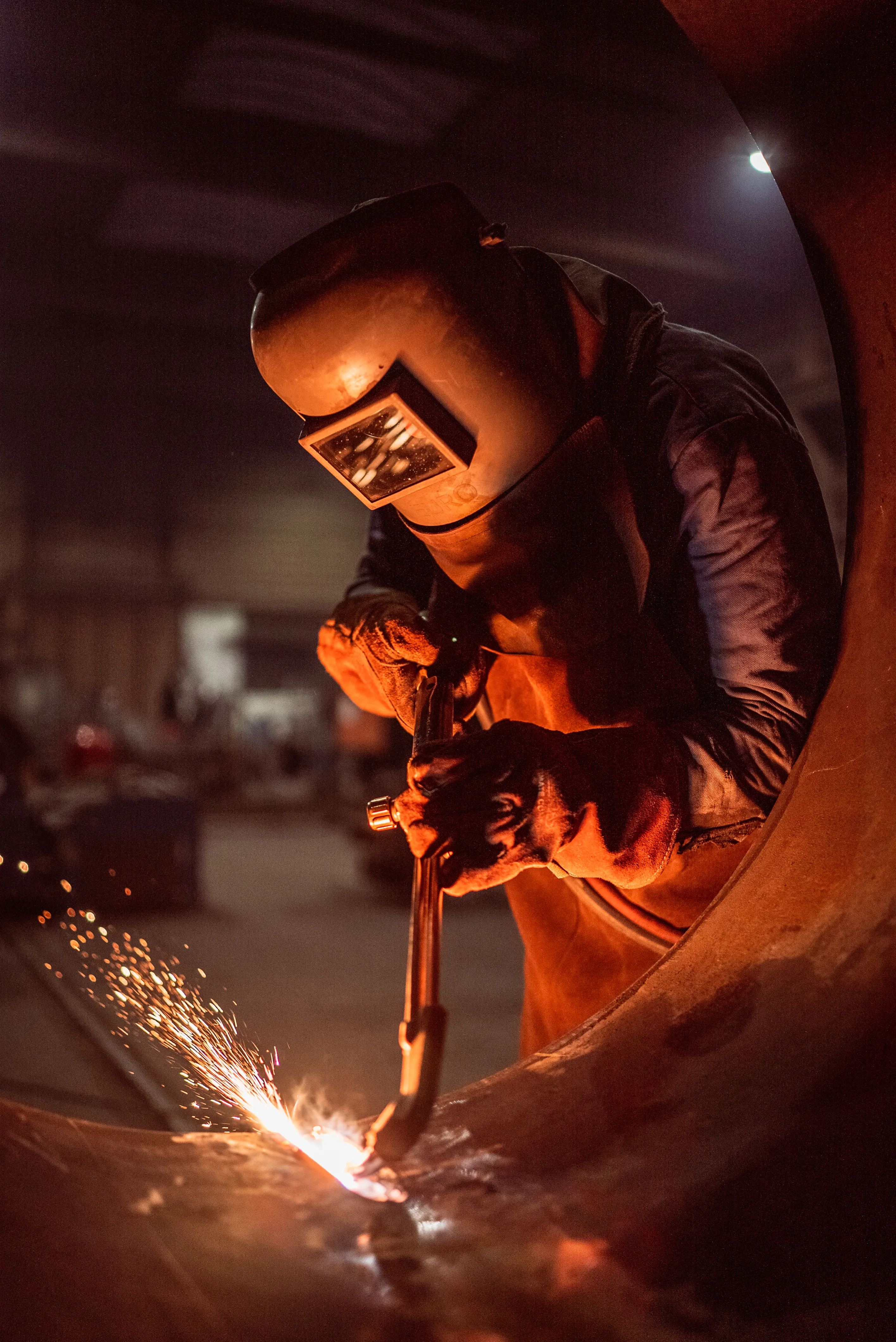
Hydrogen molecules are extremely volatile. That is why we have a zero-tolerance policy regarding weld quality in our H2 tanks. By selecting specific, hydrogen-resistant steels (to prevent hydrogen embrittlement) and conducting comprehensive 100-percent testing (NDT), we guarantee absolute diffusion tightness, even at extreme operating pressures.
Standard volumes and high-pressure classes
From 10-m³ buffer storage tanks to 400-bar high-pressure tanks, we manufacture hydrogen storage tanks in standardized volumes and fully customized special designs.
Standard volumes up to a design pressure of 50 bar
Available in vertical or horizontal configurations, manufactured in accordance with AD 2000, EN 13445, or ASME. Standard volumes for a design pressure of up to 50 bar: 10 m³, 20 m³, 33 m³, 50 m³, 75 m³, 95 m³, 100 m³, 115 m³, 130 m³, 160 m³, and 190 m³. The 10- and 20-m³ tanks typically serve as buffer storage tanks downstream of PEM and alkaline electrolysers, while the larger volumes are used as bulk and seasonal storage for H₂ industrial parks.
WOLF SAFETY
TECHNOLOGY
A hydrogen pressure vessel is an investment spanning 20 to 30 years. WOLF-Safety-Technology combines periodic inspections in accordance with BetrSichV, NDT inspections, and remaining service life assessments into a single integrated service, demonstrably reducing life-cycle costs by up to 30%.
quality assurance (QA)
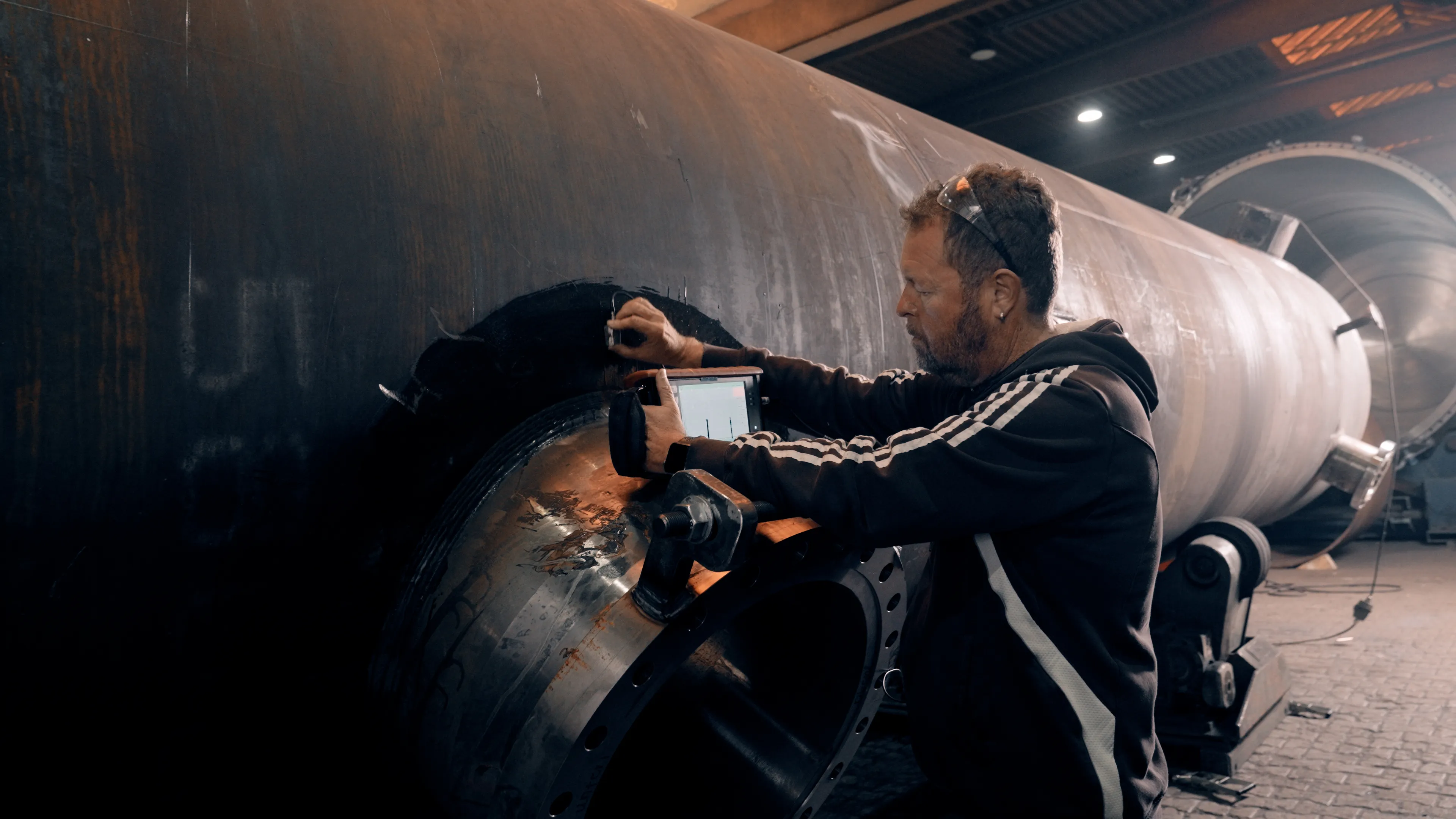
Quality assurance (QA) is handled by an in-house team of certified inspectors using non-destructive and destructive testing methods (VT, MT, PT, UT, TOFD, and phased array), precise 3D measurement, and complete batch traceability. All materials, components, and filler metals remain traceable, and all documentation is audit-proof and compliant with applicable standards. This ensures that every component meets our quality standards and complies with applicable regulations.
Design in accordance with standards
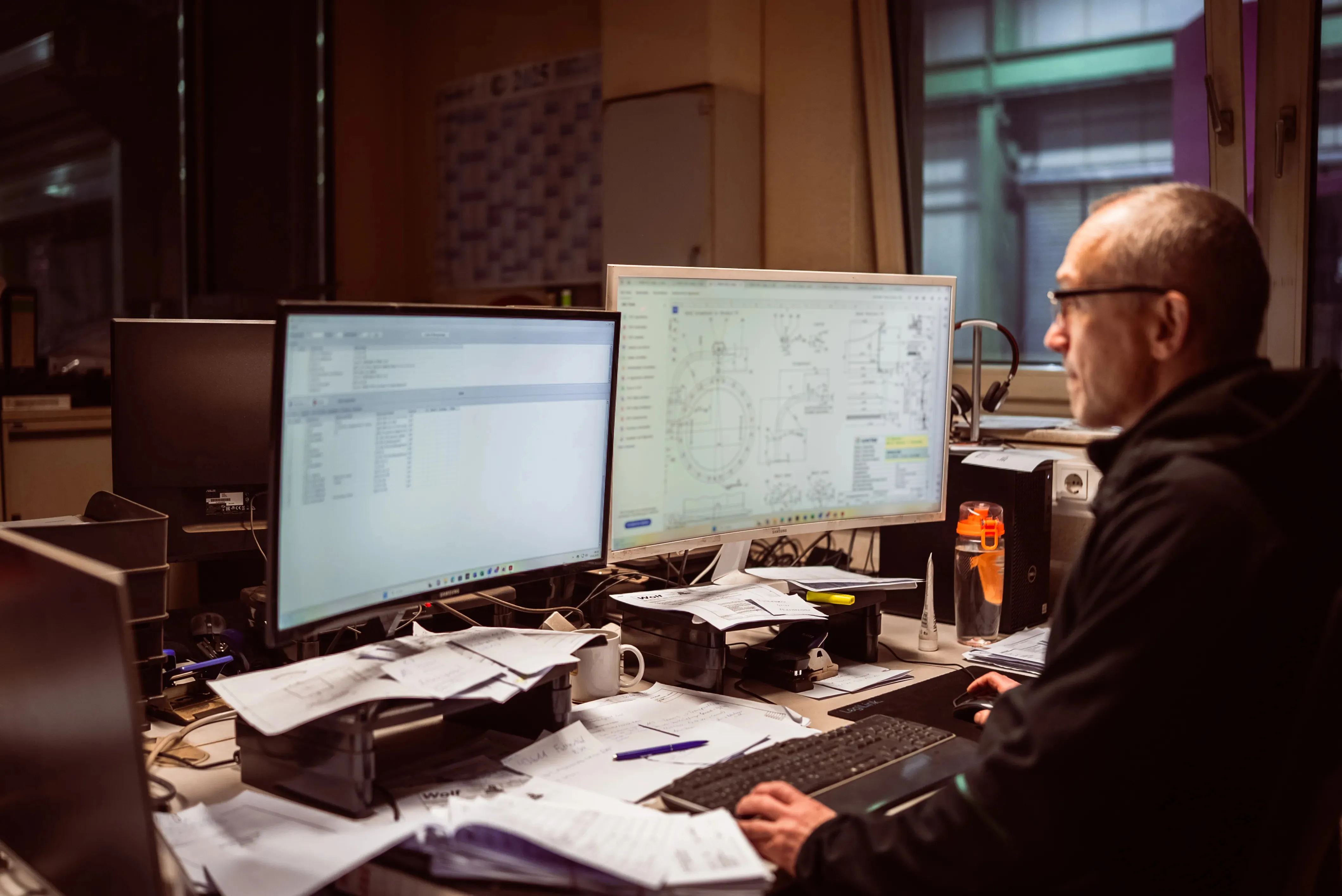
Our engineers design every hydrogen storage system using leading industry tools: Dimy6, Compress 2025 (ASME), Sant'Ambrogio NextGen 2025 (AD 2000 and EN 13445), ANSYS Mechanical Pro for FEM analyses, Nozzle-Pro 15, and TEMESfcal for flange designs in accordance with EN 1591-1. Design is performed in PTC Creo. We evaluate the fatigue strength of tanks subjected to cyclic loading in accordance with EN 13445-3 Annex B or ASME Section VIII Div. 2; upon request, we can perform “Design by Analysis” using nonlinear FEM.
Materials for H2 pressure storage tanks
Approximately 95% of our H2 storage tanks and hydrogen pressure storage tanks are made from fine-grained carbon steel of grade P355 (P355NH, P355NL1) with a high yield strength, excellent weldability, and full compliance with AD 2000 and EN 10028-3 standards. With qualified welding and consistent stress relieving heat treatment, hydrogen embrittlement is technically controlled, making P355 the economically superior choice over reflexive stainless steel. We supply stainless steels, duplex alloys, and nickel-based alloys specifically tailored to the application.
Any questions? We’re here to help you personally.
At WOLF Vessel and Apparatus Construction, you and your projects are our top priority. You can always count on our consistently high product quality and our comprehensive service.
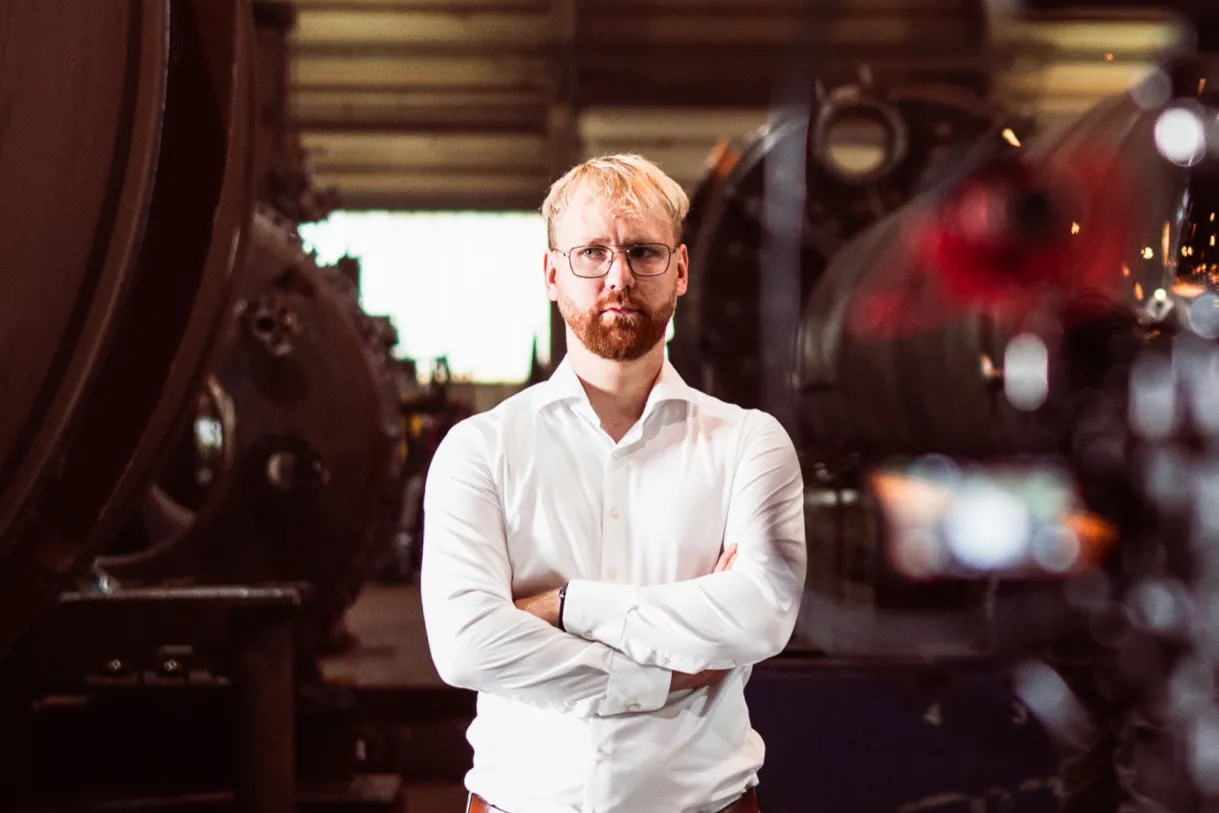
Daniel Wolf-Wasserstoff
CTO
Frequently Asked Questions About Our H2 Pressure Vessels
What are the maximum pressures for which we design our vessels? How do we address the risk of material fatigue caused by hydrogen? Here you’ll find the most important answers regarding the safe design and certification of our stationary hydrogen tanks.
How long does it take to deliver a standard H2 pressure storage tank? + − Subject to available production capacity, we deliver standard volumes within 12 to 20 weeks from the date of a binding order. Custom-made high-pressure vessels or vessels made of special alloys require 5 to 9 months, including material procurement. You will receive a binding confirmation once the technical specifications have been clarified. We recommend submitting inquiries early—the availability of H2-compatible pressure vessel steel has been sporadically tight since 2024.
Subject to available production capacity, we deliver standard volumes within 12 to 20 weeks from the date of a binding order. Custom-made high-pressure vessels or vessels made of special alloys require 5 to 9 months, including material procurement. You will receive a binding confirmation once the technical specifications have been clarified. We recommend submitting inquiries early—the availability of H2-compatible pressure vessel steel has been sporadically tight since 2024.
Do you also offer complete packages that include steel construction, platforms, and insulation? + − Yes. Upon request, we supply the H2 storage system as a complete package—including:
• Steel construction: platforms, ladders, railings, and pipe supports in accordance with EN 1090
• Heating systems: half-tube or full-tube coils, electric trace heating
• Coatings: TSA coating, CUI coatings, fire-retardant coatings (Chartek, Firetex)
• Insulation: thermal, refrigeration, contact, and fire protection insulation
• Preservation and drying prior to shipment
Ask us about our comprehensive packages—we coordinate suppliers and save you the hassle of managing them yourself.
Yes. Upon request, we supply the H2 storage system as a complete package—including:
• Steel construction: platforms, ladders, railings, and pipe supports in accordance with EN 1090
• Heating systems: half-tube or full-tube coils, electric trace heating
• Coatings: TSA coating, CUI coatings, fire-retardant coatings (Chartek, Firetex)
• Insulation: thermal, refrigeration, contact, and fire protection insulation
• Preservation and drying prior to shipment
Ask us about our comprehensive packages—we coordinate suppliers and save you the hassle of managing them yourself.
What maintenance measures are required for my hydrogen storage system? + − Hydrogen pressure vessels are subject to periodic inspections in accordance with the German Industrial Safety Regulation (BetrSichV). Typically, the following are inspected:
• Internal inspection (every 5 years, depending on the inspection plan)
• Strength testing / pressure test (in most cases, every 10 years)
• External inspection (every 2 years)
• Replacing gaskets on flange and nozzle connections
• Functional testing of pressure safety valves and pressure measurement points
As part of our WOLF Safety Technology program, we proactively plan these measures, coordinate with the notified body, and directly carry out the associated work that is not subject to testing.
Hydrogen pressure vessels are subject to periodic inspections in accordance with the German Industrial Safety Regulation (BetrSichV). Typically, the following are inspected:
• Internal inspection (every 5 years, depending on the inspection plan)
• Strength testing / pressure test (in most cases, every 10 years)
• External inspection (every 2 years)
• Replacing gaskets on flange and nozzle connections
• Functional testing of pressure safety valves and pressure measurement points
As part of our WOLF Safety Technology program, we proactively plan these measures, coordinate with the notified body, and directly carry out the associated work that is not subject to testing.
What is the process for delivery and on-site installation? + − Segment manufacturing suitable for transport, with single-piece lengths of up to 50 m, is part of our standard expertise. For larger vessels, we deliver prefabricated segments and assemble them on site with qualified welders and welding supervision. We coordinate heavy-haul transport, crane-specific lifting points, and installation on prepared foundations. Commissioning support and final acceptance by a notified body are included in the scope of delivery.
Segment manufacturing suitable for transport, with single-piece lengths of up to 50 m, is part of our standard expertise. For larger vessels, we deliver prefabricated segments and assemble them on site with qualified welders and welding supervision. We coordinate heavy-haul transport, crane-specific lifting points, and installation on prepared foundations. Commissioning support and final acceptance by a notified body are included in the scope of delivery.