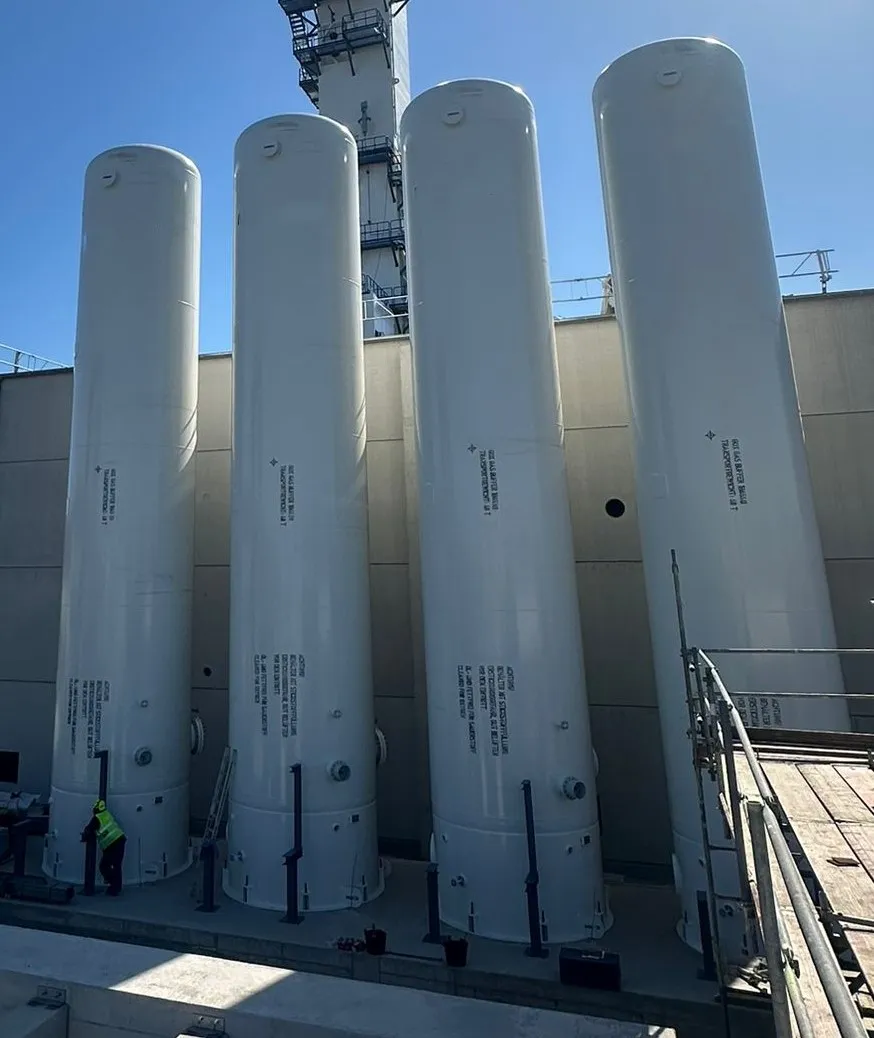
Gas Separation Unit (GSU) for electrolyzers
We manufacture gas separation units (GSUs) as pressure vessels for electrolysers: They reliably separate the produced hydrogen and oxygen from the electrolyte. Compliant with AD 2000, EN 13445, and ASME standards, tested and documented—all from a single source.
Gas Separation Unit: High-precision equipment manufacturing for the reliable separation of H₂ and O₂
In a gas separation unit (GSU) for electrolyzers, the design pressure, operating temperature, and flow pattern must be precisely coordinated. We manufacture the pressure vessels and the casing for your GSU with tight tolerances, precise sealing surfaces, and an integrated demister. This ensures reliable separation of gas and electrolyte, low-maintenance continuous operation, and protection of the sensitive internal components.
Key technical data for the GSU: Two-stage gas-liquid separation
We manufacture gas separation units (GSUs) as vertical pressure vessels with integrated demisters, precisely tailored to PEM electrolyzers or alkaline electrolyzers (AELs) and adapted to your stack design, ranging from pilot-scale to GW-scale plants.
Design ranging from pilot-scale to GW-scale
- Volume: 50 l (pilot plants) to 50 m³ (large-scale GW plants)
- Design pressure: 1–80 bar (standard 6–30 bar)
- Design temperature: −20 °C to +120 °C
- Demister efficiency: > 99.9% droplet separation > 5 µm
- Throughput: up to 50,000 Nm³/h of gas volume per vessel
- Level range: precise control with a level tolerance of < ± 10 mm
- Purity output: Residual moisture < 0.1% by volume before the dryer stage
In-house quality assurance (QA)
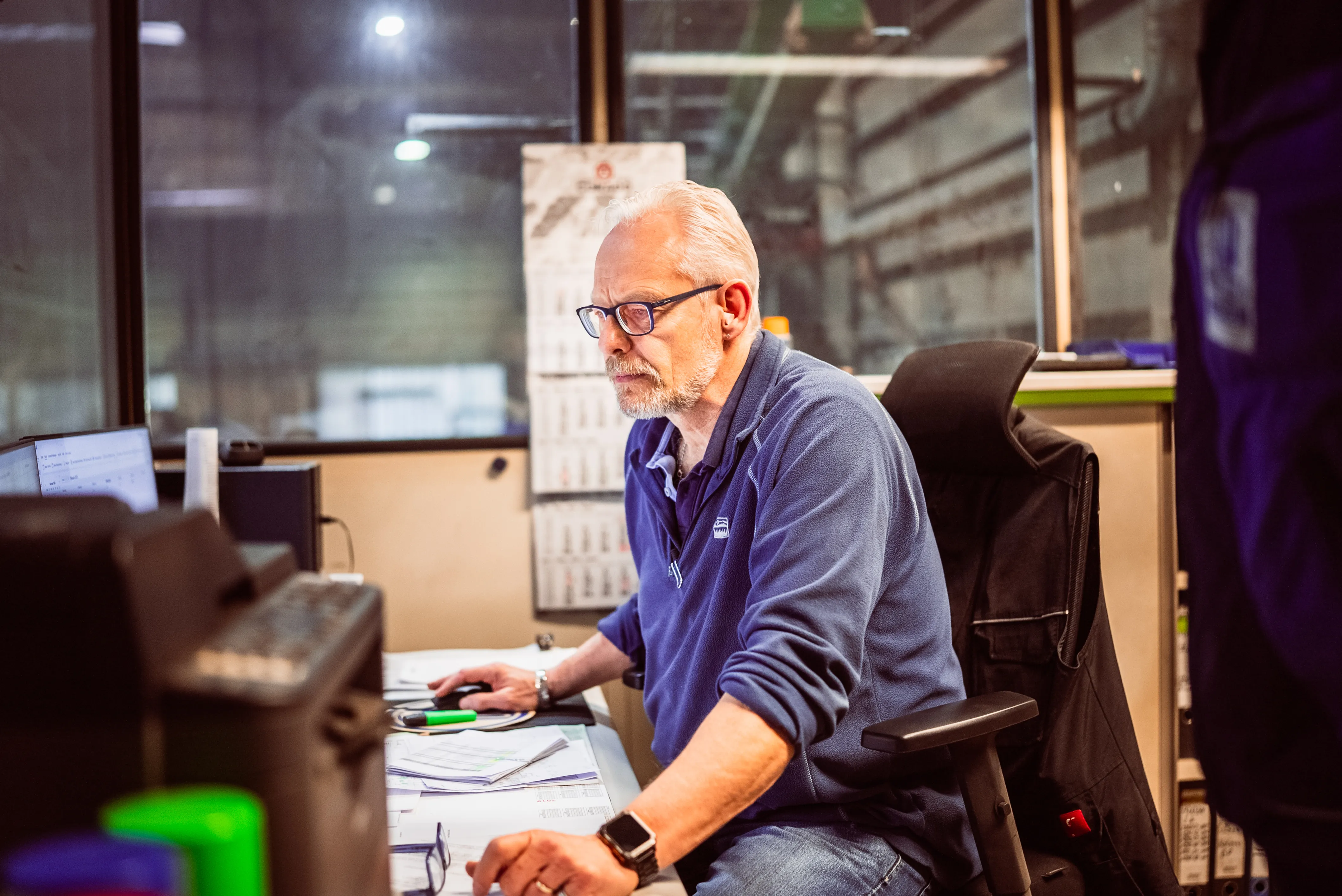
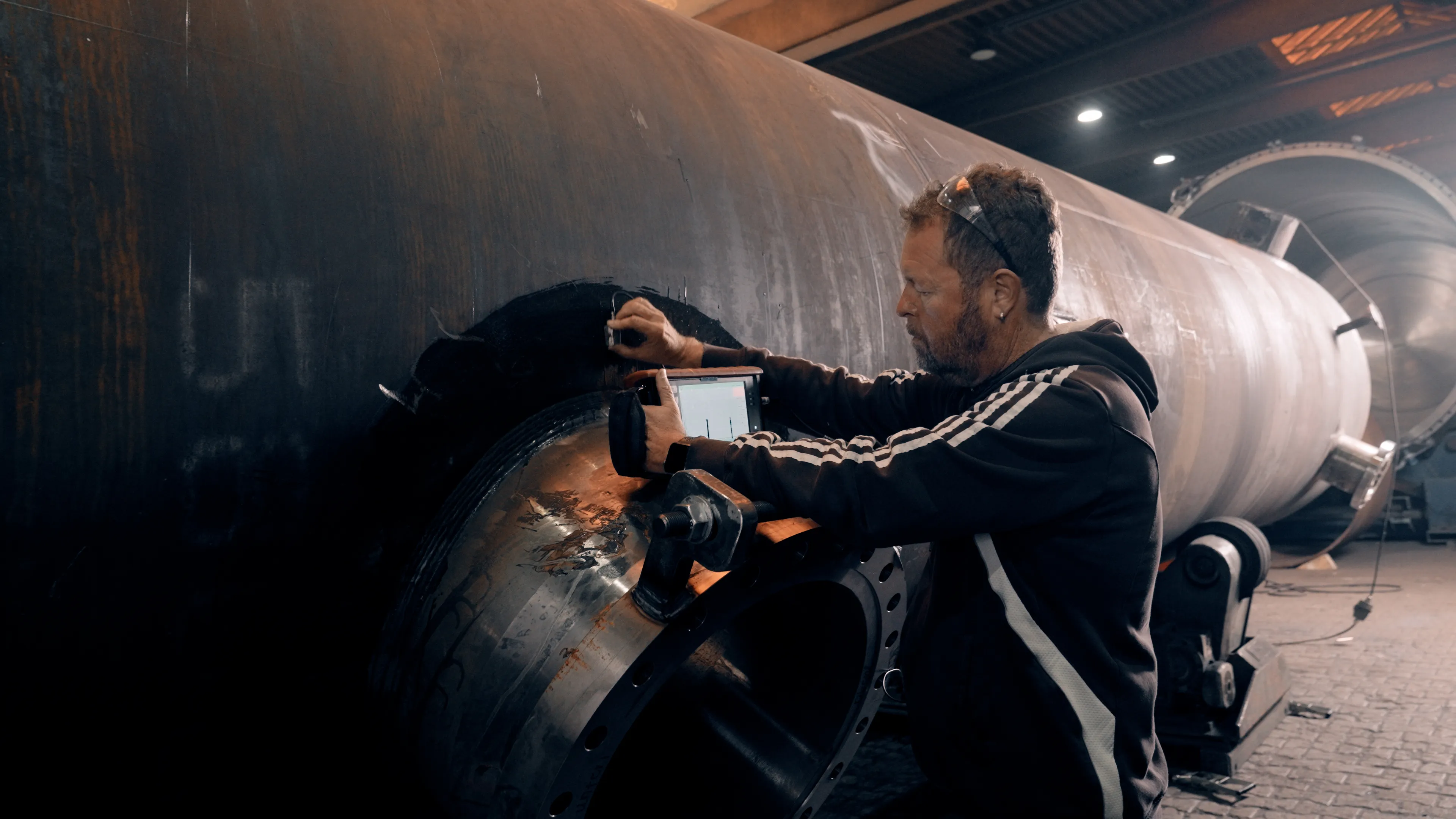
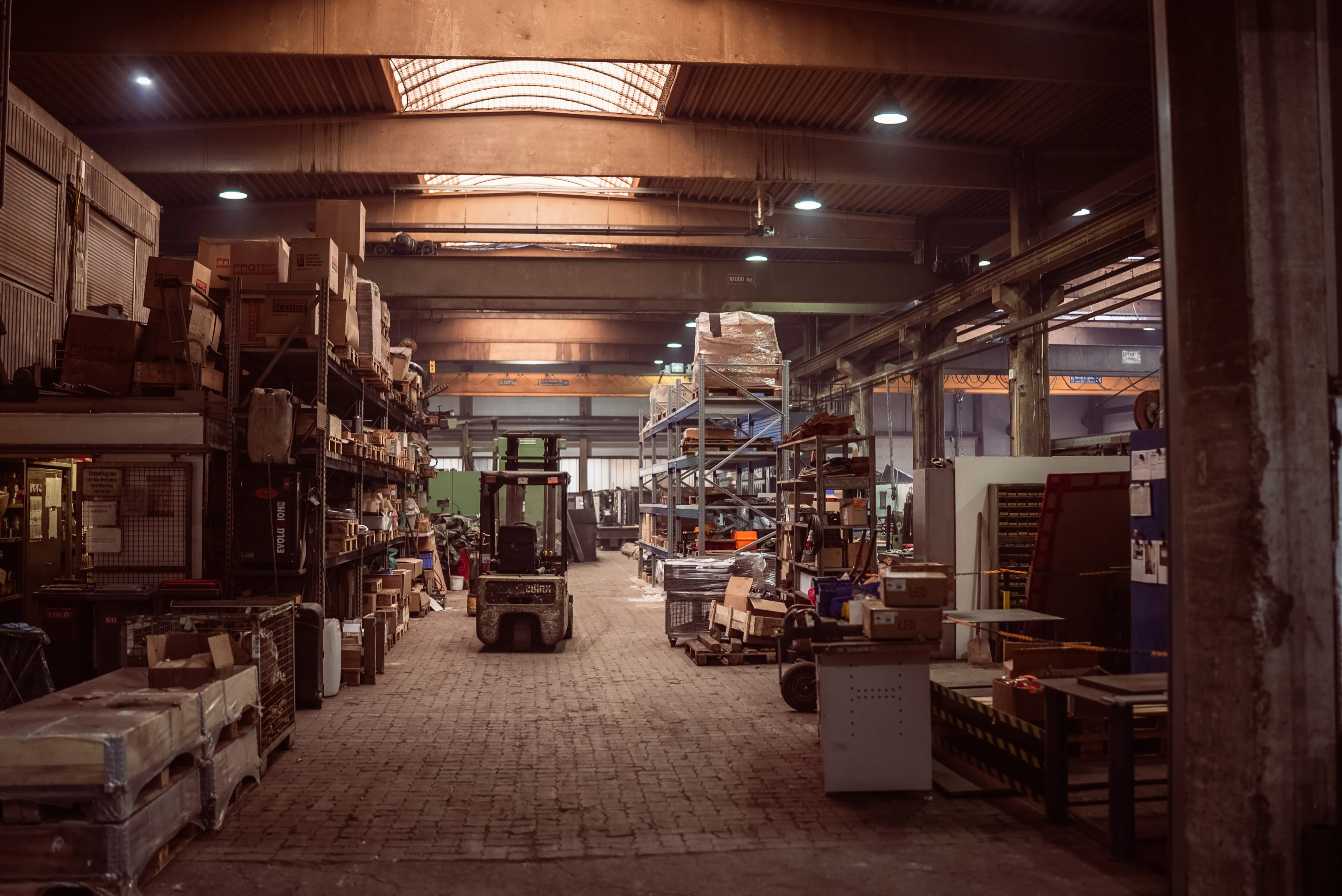
Quality assurance (QA) is handled by an in-house team of certified inspectors using non-destructive and destructive testing methods (VT, MT, PT, UT, TOFD, and phased array), precise 3D measurement, and complete batch traceability. All materials, components, and filler metals remain traceable, and all documentation is audit-proof and compliant with applicable standards. This ensures that every component meets our quality standards and complies with applicable regulations.
Design in accordance with standards
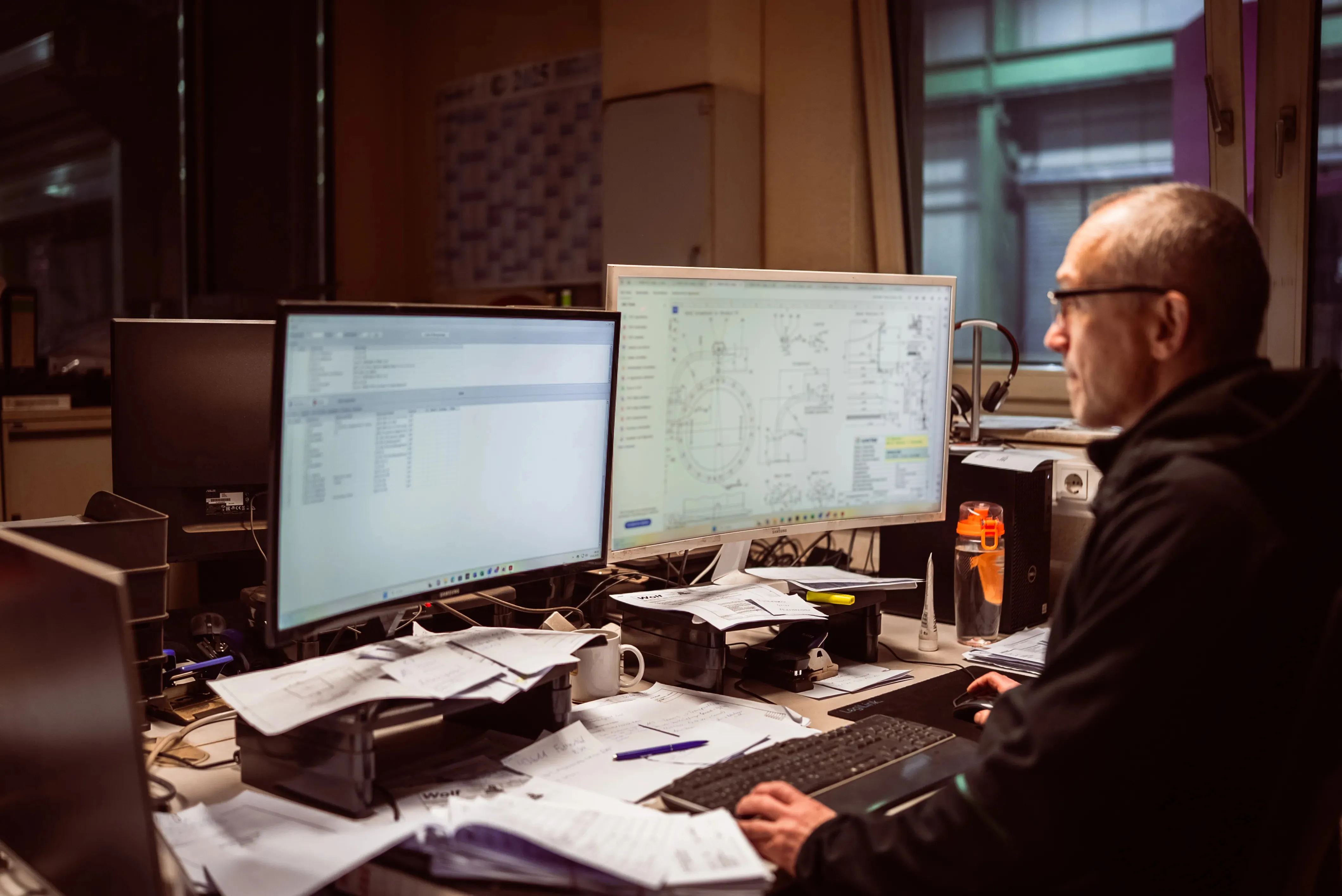
Our engineers perform multi-stage calculations for each gas separation unit in accordance with AD 2000, EN 13445, and ASME: Pressure mechanics using Sant'Ambrogio NextGen 2025 (AD 2000, EN 13445) and Compress 2025 (ASME); nozzles and thermal loads via FEM using ANSYS Mechanical Pro and Nozzle-Pro 15 (WRC 537, EN 13445 Annex K). In addition, we use industry-proven design methods for phase separation, residence time, and demister sizing. The design is performed in PTC Creo and can be integrated into your stack and skid models.
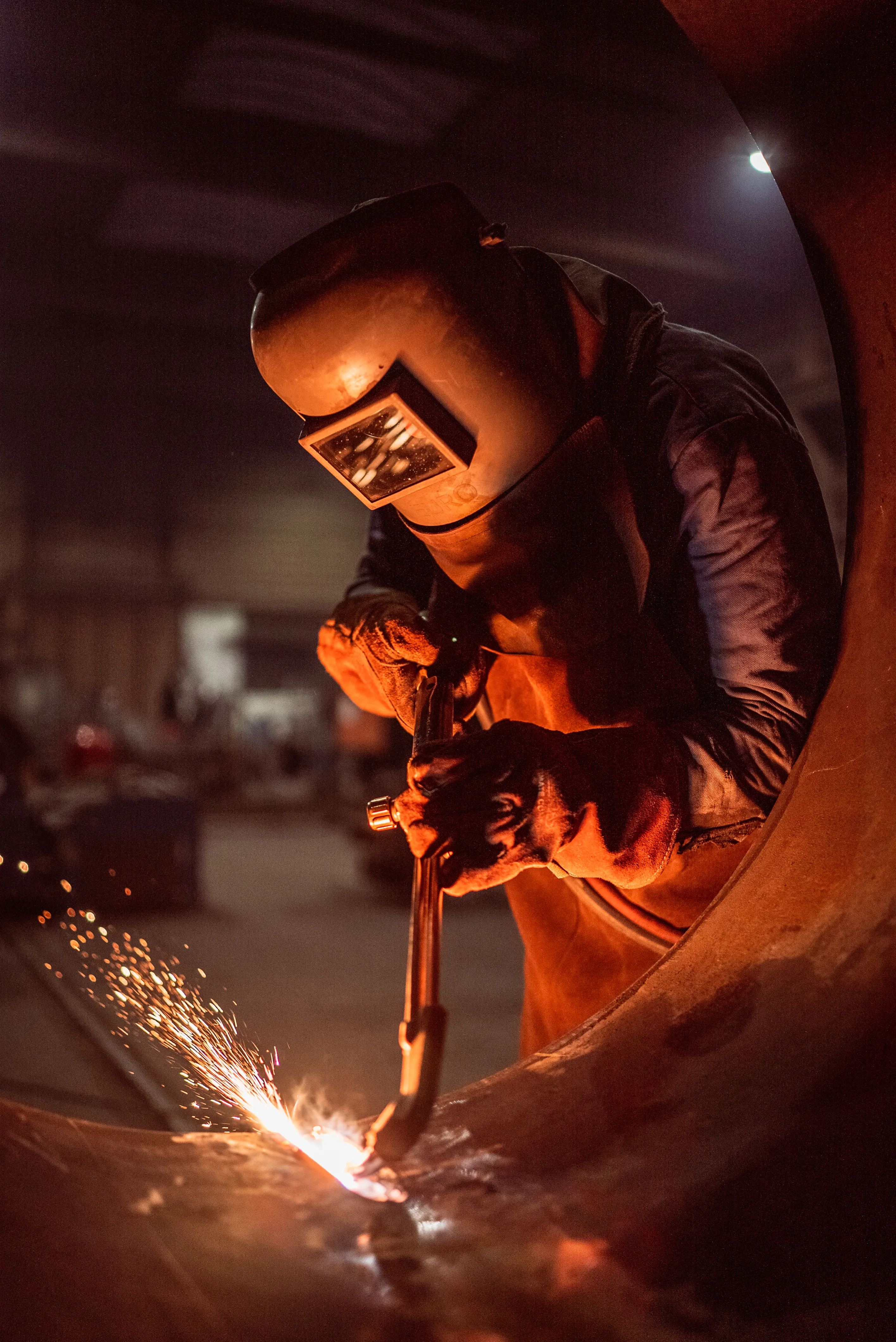
Material selection based on electrolyte: From 316L to titanium
The choice of material depends on the electrolyte. For alkaline electrolyzers (AEL) using KOH solution (70 to 90 °C), we use corrosion-resistant stainless steels: 1.4404 (316L), 1.4571 (316Ti), and 1.4539 (904L). Nickel-based alloys are used for applications requiring extreme service life. For PEM systems using demineralized water, the highest purity is essential: 1.4301 (304), 1.4404 (316L), and Grade 2 and 7 titanium for the oxygen side. We address high-pressure and special applications with duplex 1.4462.
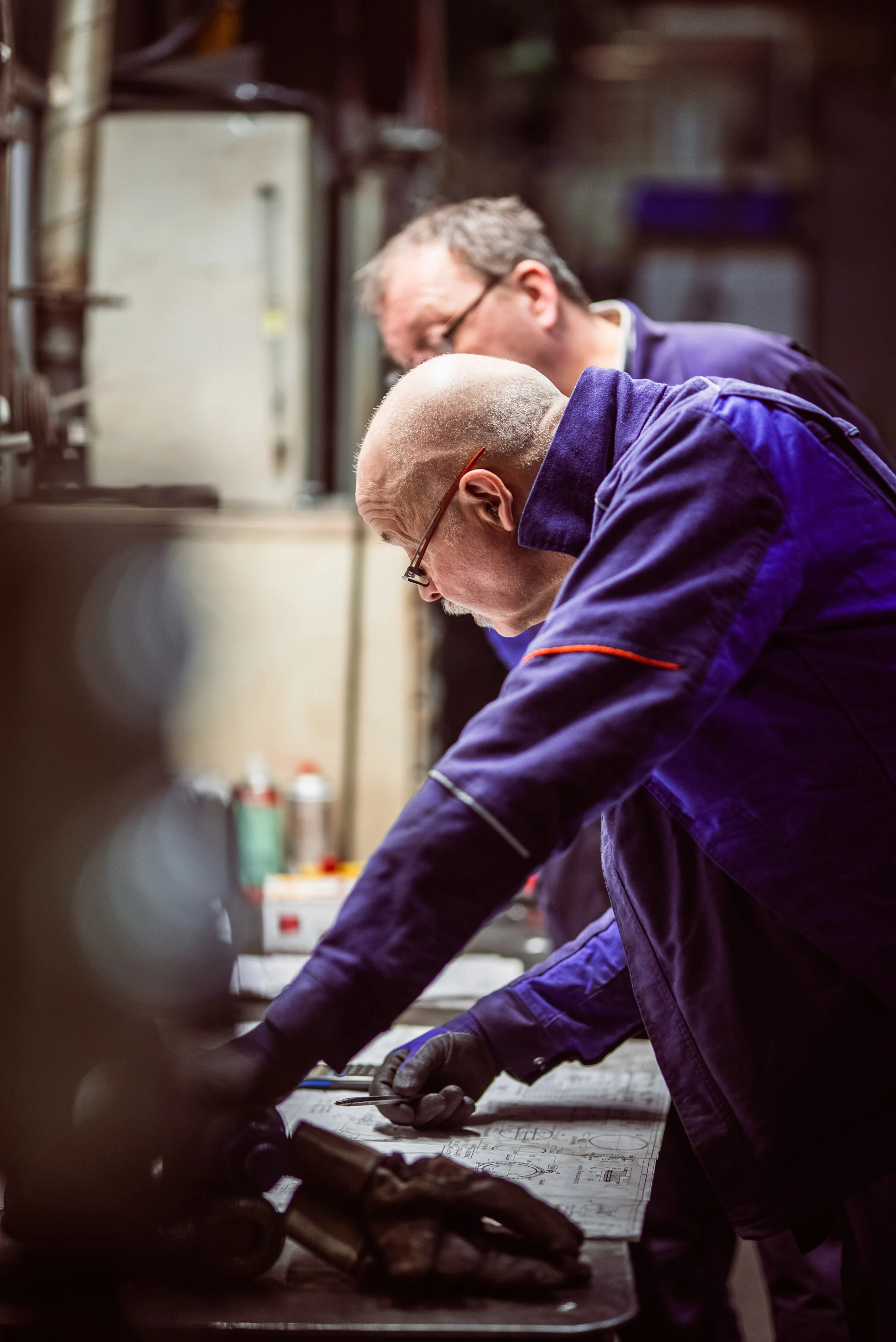
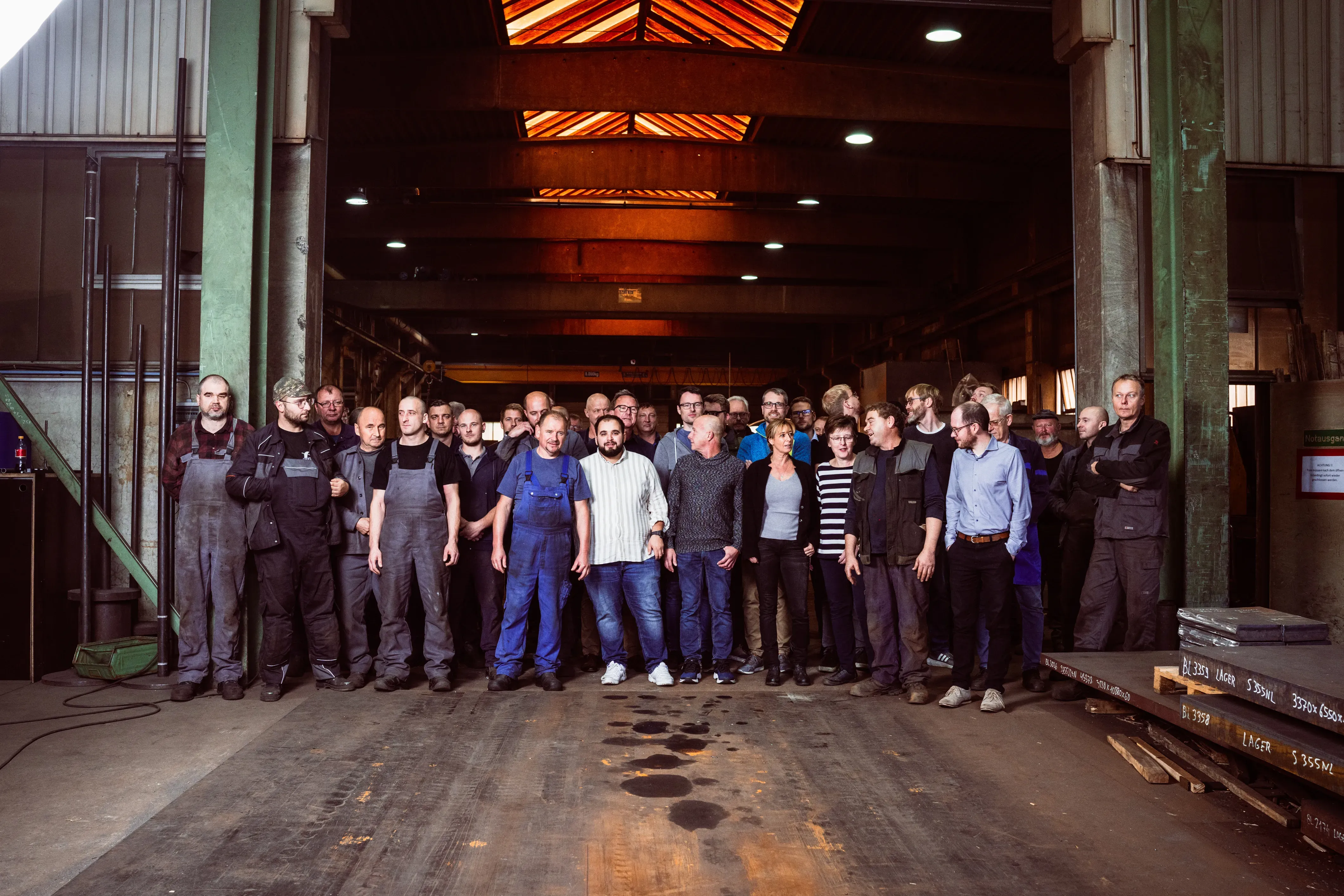
Any questions? We’re here to help you personally.
At WOLF Behälter- und Apparatebau, you and your projects are our top priority. You can always count on our consistently high product quality and our comprehensive service.
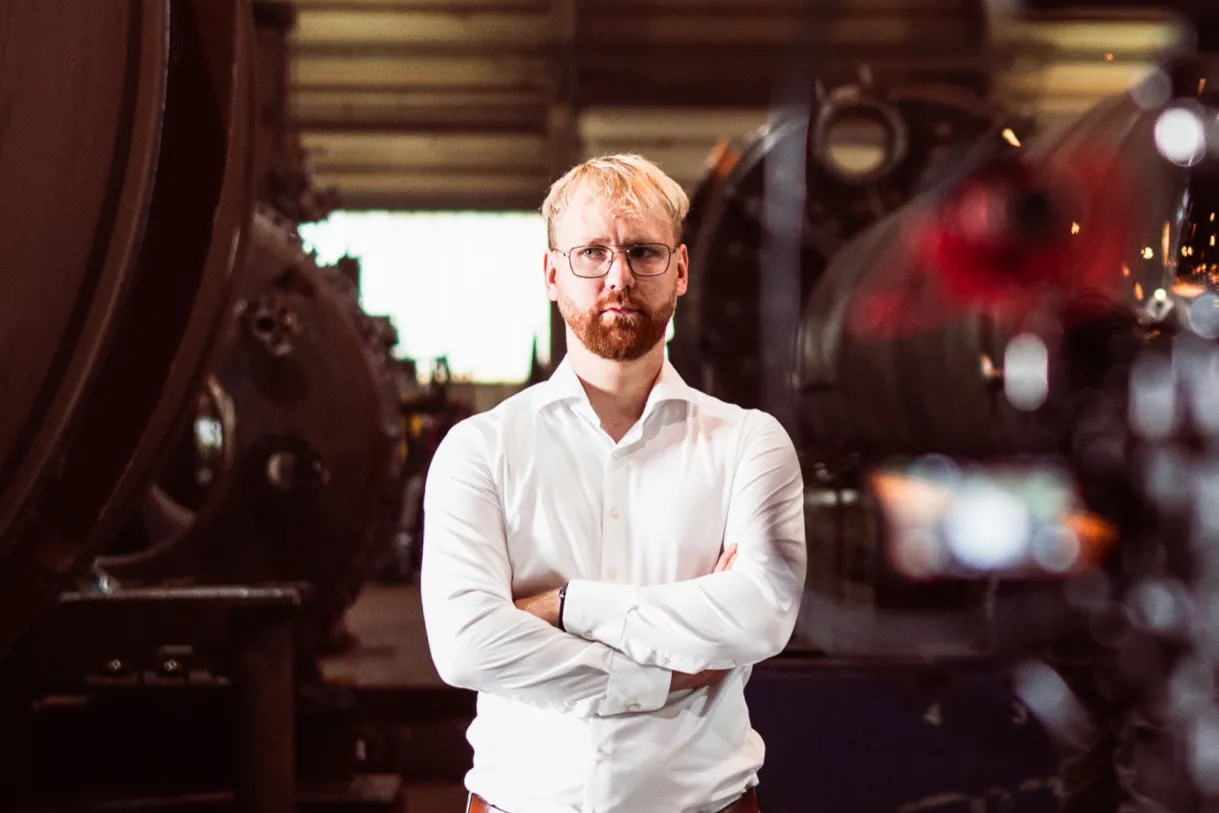
Daniel Wolf
CTO
Frequently Asked Questions About Gas Separation Units for Electrolyzers
How do we design the GSU for PEM and alkaline electrolysers? Which materials are suitable for KOH lye and which for PEM applications? Here you’ll find the most important answers regarding the design, material selection, and safety of our Gas Separation Units.
Which standards and certifications apply? + − Our GSUs are consistently designed and manufactured in accordance with the leading pressure equipment regulations:
• AD 2000 Information Sheet – German standard for pressure equipment
• EN 13445 (including Annex B: Cycle Life Assessment)
• ASME Section VIII Div. 1 and Div. 2 with U, U2, and S stamps
• PED 2014/68/EU – CE conformity
• EN 1090-1/-2 (skid frames and platforms)
• DIN EN ISO 3834 (Welding Technology)
• ATEX-compliant design for Zone 1 / Zone 2 available upon request
Our GSUs are consistently designed and manufactured in accordance with the leading pressure equipment regulations:
• AD 2000 Information Sheet – German standard for pressure equipment
• EN 13445 (including Annex B: Cycle Life Assessment)
• ASME Section VIII Div. 1 and Div. 2 with U, U2, and S stamps
• PED 2014/68/EU – CE conformity
• EN 1090-1/-2 (skid frames and platforms)
• DIN EN ISO 3834 (Welding Technology)
• ATEX-compliant design for Zone 1 / Zone 2 available upon request
What are realistic delivery times? + − For a standard GSU in the classic AEL pressure range (6–30 bar, 1–10 m³ volume), we deliver within 14–22 weeks, depending on our workload. Special high-pressure designs (>50 bar) or particularly large vessels (>20 m³) require 22–36 weeks, including material procurement. The design and calculation phase takes 4–8 weeks. Clarifying the specifications early on significantly shortens your plant’s time-to-hydrogen.
For a standard GSU in the classic AEL pressure range (6–30 bar, 1–10 m³ volume), we deliver within 14–22 weeks, depending on our workload. Special high-pressure designs (>50 bar) or particularly large vessels (>20 m³) require 22–36 weeks, including material procurement. The design and calculation phase takes 4–8 weeks. Clarifying the specifications early on significantly shortens your plant’s time-to-hydrogen.
Can you supply a GSU as a complete skid? + − Yes. Upon request, we can deliver the GSU skid to you fully pre-assembled:
• GSU pressure vessels (H₂ and O₂)
• Lye circulation pumps with variable-frequency drives
• Heat exchangers for electrolyte temperature control
• Piping, valves, safety fittings
• Sensors (pressure, differential pressure, level, temperature, H2/O2 analysis)
• ATEX-compliant control cabinet wiring (upon request)
This significantly reduces your plant engineering efforts and speeds up commissioning by weeks.
Yes. Upon request, we can deliver the GSU skid to you fully pre-assembled:
• GSU pressure vessels (H₂ and O₂)
• Lye circulation pumps with variable-frequency drives
• Heat exchangers for electrolyte temperature control
• Piping, valves, safety fittings
• Sensors (pressure, differential pressure, level, temperature, H2/O2 analysis)
• ATEX-compliant control cabinet wiring (upon request)
This significantly reduces your plant engineering efforts and speeds up commissioning by weeks.
Which demister model do you recommend? + − The choice depends on gas velocity, KOH foaming tendency, and the maintenance plan:
• Wire mesh pad (York type)—cost-effective standard option, easy to replace through a manway
• Vane-Pack lamellar separator – higher gas velocities, lower pressure drop, less tendency to form scale
• Two-stage combination (mesh + vane) – maximum separation efficiency > 99.9%, ideal for sensitive dryer stages
For lye systems that produce heavy foaming, we recommend installing a Vane-Pack upstream and a Mesh Demister downstream.
The choice depends on gas velocity, KOH foaming tendency, and the maintenance plan:
• Wire mesh pad (York type)—cost-effective standard option, easy to replace through a manway
• Vane-Pack lamellar separator – higher gas velocities, lower pressure drop, less tendency to form scale
• Two-stage combination (mesh + vane) – maximum separation efficiency > 99.9%, ideal for sensitive dryer stages
For lye systems that produce heavy foaming, we recommend installing a Vane-Pack upstream and a Mesh Demister downstream.